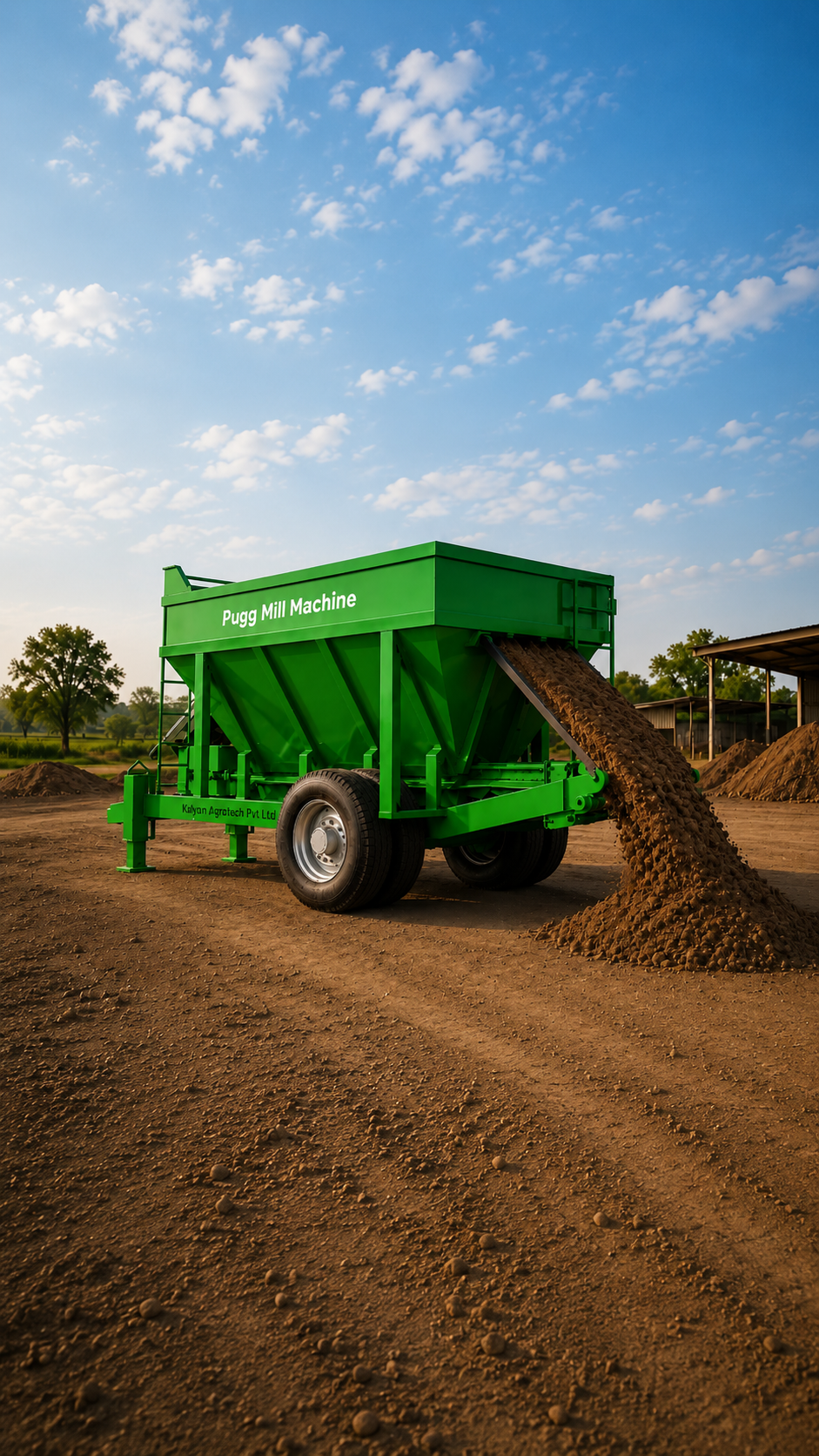


A pug mill machine is an important piece of equipment used for mixing, kneading, and preparing clay for brick, tile, and ceramic manufacturing. Properly prepared clay plays a major role in achieving smooth molding, consistent production, and uniform finished products.
Also known as a clay mixer machine, a pug mill is designed to thoroughly blend clay, soil, water, and other required materials. Its rotating mixing components help break down lumps, distribute moisture, and create a homogeneous clay mixture ready for further processing.
In this guide, we explain how a pug mill machine works, its working process, major components, benefits, and applications in brick manufacturing.
What Is a Pug Mill Machine?
A pug mill machine is an industrial machine designed to mix and knead clay into a smooth and consistent mass. It is commonly used in brick manufacturing plants, ceramic industries, and tile production units.
The machine processes raw clay by mixing it with water and other additives as required. The material passes through the mixing chamber, where rotating blades or shafts continuously knead and blend the clay.
A brick pug mill helps prepare clay before it reaches the molding stage, making it an important part of the clay-processing and brick-manufacturing workflow.
How Does a Pug Mill Machine Work?
The working process of a pug mill machine can be understood in several steps.
- Raw Material Feeding
The process begins when clay, soil, and other required raw materials are fed into the pug mill through the hopper or feeding section.
Before entering the machine, the clay may be processed using a soil grinder or crusher to reduce large lumps and prepare the material for mixing.
- Water and Additive Mixing
Water is added to the clay according to the required consistency. Depending on the manufacturing process, other suitable additives may also be introduced.
Proper moisture distribution is important because clay that is too dry or too wet can affect the molding process.
- Kneading and Mixing
Inside the machine, rotating blades or mixing components continuously move and knead the clay.
The material is repeatedly mixed to help:
- Break down smaller remaining lumps
- Distribute water evenly
- Improve clay consistency
- Increase workability
- Prepare the clay for molding
This is the main working stage of a clay mixer machine.
- Homogenization of Clay
As the clay moves through the mixing chamber, it becomes more uniform. Continuous kneading helps create a consistent clay mass with a smoother texture.
A well-mixed clay material can support better handling during the next stage of brick manufacturing.
- Air Pocket Reduction
The pugging and kneading action can help reduce trapped air within the clay mass. This improves the consistency and workability of the material before molding.
Depending on the type of pug mill and production setup, the method of air removal may vary.
- Clay Discharge
Once the clay has been mixed and kneaded, the prepared material moves toward the discharge section.
The processed clay is then ready to be transferred to the next stage, such as:
Clay Preparation → Pug Mill → Brick Molding → Drying → Firing
Main Components of a Pug Mill Machine
Although the exact design may vary, a typical pug mill machine includes several important components.
Feeding Hopper
The hopper receives clay and other raw materials before they enter the mixing chamber.
Mixing Chamber
This is the main section where the clay is mixed and kneaded.
Mixing Blades or Shafts
Rotating blades move, mix, and knead the material to create a more uniform clay mixture.
Drive System
The motor and drive system provide the power required to operate the mixing components.
Water Addition System
Depending on the machine configuration, a system may be used to add and control water during mixing.
Discharge Outlet
The prepared clay leaves the machine through the discharge section and moves to the next production stage.
Advantages of Using a Pug Mill Machine
- Uniform Clay Mixing
A pug mill machine thoroughly mixes clay and water, helping create a more consistent material for brick and tile production.
- Improved Clay Workability
Proper kneading can make the clay easier to process and shape during the molding stage.
- Faster Clay Preparation
Mechanical mixing reduces the time and manual effort required to prepare large quantities of clay.
- Better Moisture Distribution
The continuous mixing process helps distribute moisture more evenly throughout the clay.
- Reduced Manual Labor
A clay mixer machine automates much of the clay mixing process, reducing dependence on manual preparation.
- Supports Continuous Production
For brick manufacturing units, a brick pug mill can help maintain a continuous flow of prepared clay for the next production stage.
Applications of a Pug Mill Machine
A pug mill machine is used in several industries where clay and similar materials require mixing and kneading.
Brick Manufacturing
A brick pug mill prepares clay before it enters the brick molding process.
Tile Manufacturing
The machine can help prepare consistent clay mixtures used for manufacturing different types of tiles.
Ceramic Industries
Pug mills are also used for preparing clay and ceramic materials before shaping and forming.
Clay Processing Plants
Industrial clay-processing operations can use pug mills to mix and homogenize raw materials.
Pug Mill Machine vs. Clay Mixer Machine
The terms pug mill machine and clay mixer machine are often used for equipment that performs similar clay preparation functions. Both are designed to mix and knead clay, but the exact design and functionality can vary based on the machine type.
When selecting equipment, manufacturers should check:
- Required production capacity
- Type of clay being processed
- Required moisture level
- Mixing requirements
- Power requirements
- Existing production setup
- Maintenance needs
The right machine should be selected according to the actual production requirements.
Importance of a Pug Mill in Brick Manufacturing
Clay preparation is a critical stage in brick production. If the material is not properly mixed, variations in texture and moisture can create challenges during molding and further processing.
A pug mill machine helps prepare a more consistent clay mass before the material enters the brick-making machine.
A typical workflow may include:
Raw Soil → Soil Grinding → Clay Mixing → Pug Mill Processing → Brick Molding → Drying → Firing
By integrating suitable equipment at each stage, manufacturers can create a smoother and more efficient production process.
How to Choose the Right Pug Mill Machine
Before purchasing a pug mill, consider the following factors.
Production Capacity
Choose a machine that can process enough clay to meet your daily production requirements.
Raw Material Type
Different clay types may have different moisture and mixing requirements.
Machine Construction
For industrial applications, durable and heavy-duty construction is important for reliable long-term operation.
Power Requirements
Check whether the machine’s power requirements are suitable for your available electrical or industrial setup.
Maintenance
Select a machine with accessible components that can be inspected and maintained easily.
Integration With Other Machinery
The pug mill should work efficiently with your soil grinder, conveyor system, and brick-making machine.
Conclusion
A pug mill machine is an important solution for preparing clay for brick, tile, and ceramic manufacturing. It works by feeding raw clay into a mixing chamber, adding water as required, and using rotating components to knead and homogenize the material.
As a reliable clay mixer machine, it helps improve material consistency, distribute moisture, reduce manual labor, and support smoother production. For brick manufacturers, a properly selected brick pug mill can become an important part of an efficient clay-processing workflow.
Before investing in a machine, evaluate your raw material, production capacity, existing setup, and processing requirements to choose the most suitable solution.
Frequently Asked Questions
What is a pug mill machine used for?
A pug mill machine is used to mix, knead, and prepare clay for brick, tile, ceramic, and other clay-processing applications.
How does a pug mill machine work?
The machine feeds clay into a mixing chamber where rotating blades or shafts knead and mix the material with water, creating a more consistent clay mass.
Is a pug mill the same as a clay mixer machine?
The terms are often used for similar clay-mixing equipment, although the exact design and functionality can vary depending on the machine.
Why is a pug mill important for brick manufacturing?
It helps prepare a consistent and workable clay mixture before the molding stage, supporting smoother brick production.
What materials can a brick pug mill process?
Depending on the machine design and production requirements, it can process clay, soil, water, and suitable additives used in clay preparation.